Two oak species are native to Poland: the pedunculate oak (Quercus robur L.) and the sessile oak (Quercus petraea (Matt.) Liebl.). While both belong to the same genus and share many ecological characteristics, they differ in morphology, habitat preference, and distribution within the country. Understanding the distinction between these species is relevant to forest ecology, stand management, and habitat classification.
A third species, the Turkish oak (Quercus cerris), occurs in southern Poland at the northern edge of its natural range but is not considered a primary component of Polish forest types.

Quercus robur — Pedunculate Oak
Quercus robur, also known as the English oak or common oak, is the more widespread of the two species in Poland. It occupies lowland and sub-montane zones, thriving particularly in fertile, moist, but not waterlogged soils associated with river floodplains, lowland mixed forests, and the edges of riparian woodland.
Morphological Identification
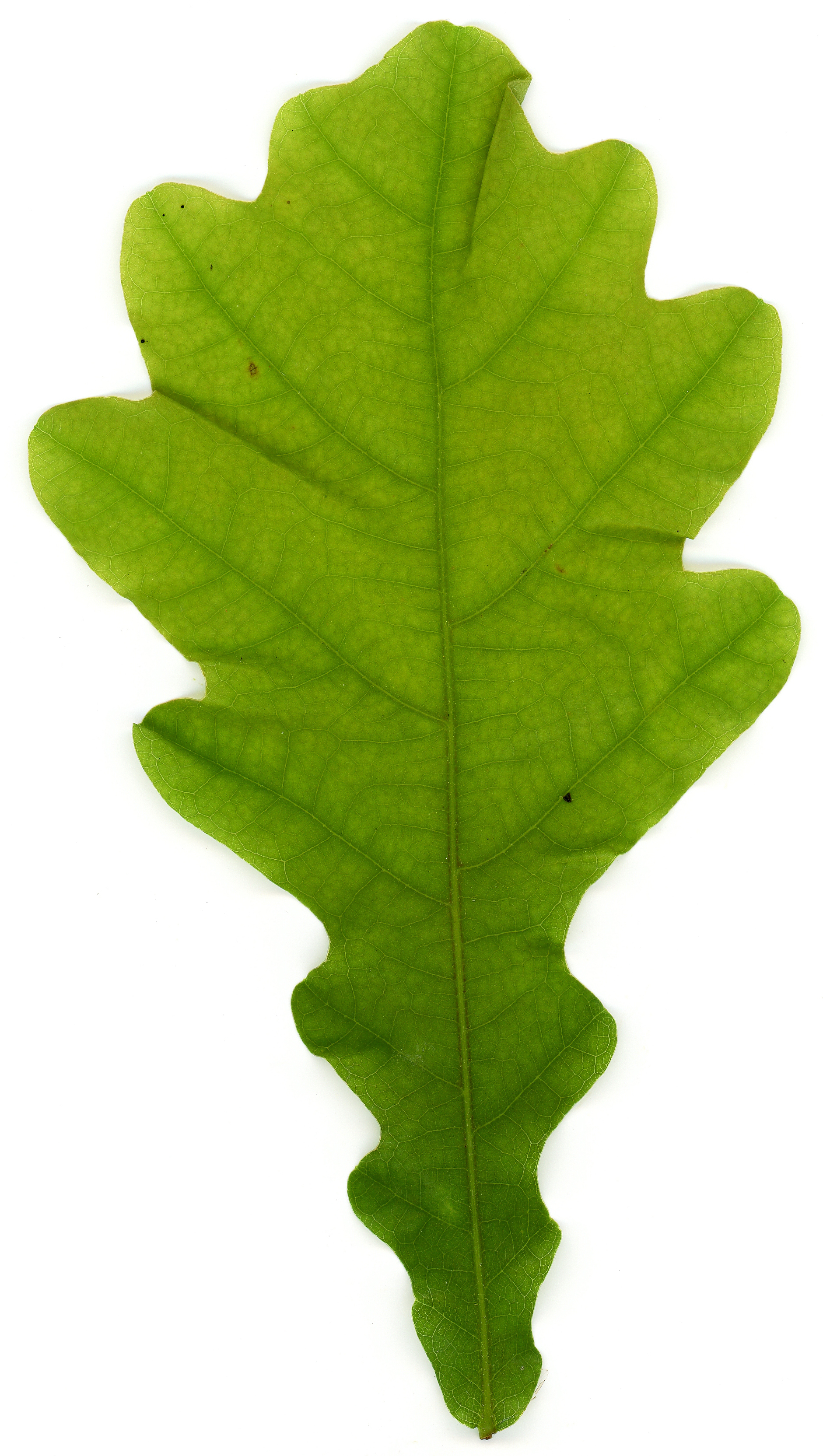
The clearest identification feature is the acorn stalk (peduncle). In Q. robur, acorns are attached to long stalks — typically 3–8 cm — that bear two to five acorns. The leaves, by contrast, are almost stalkless (sessile) or have very short petioles of 2–5 mm. Leaf shape is the classic deeply lobed form with rounded lobes and two small basal ears (auricles) at the base of the blade. Leaves emerge relatively late in spring, often after Q. petraea.
Distribution in Poland
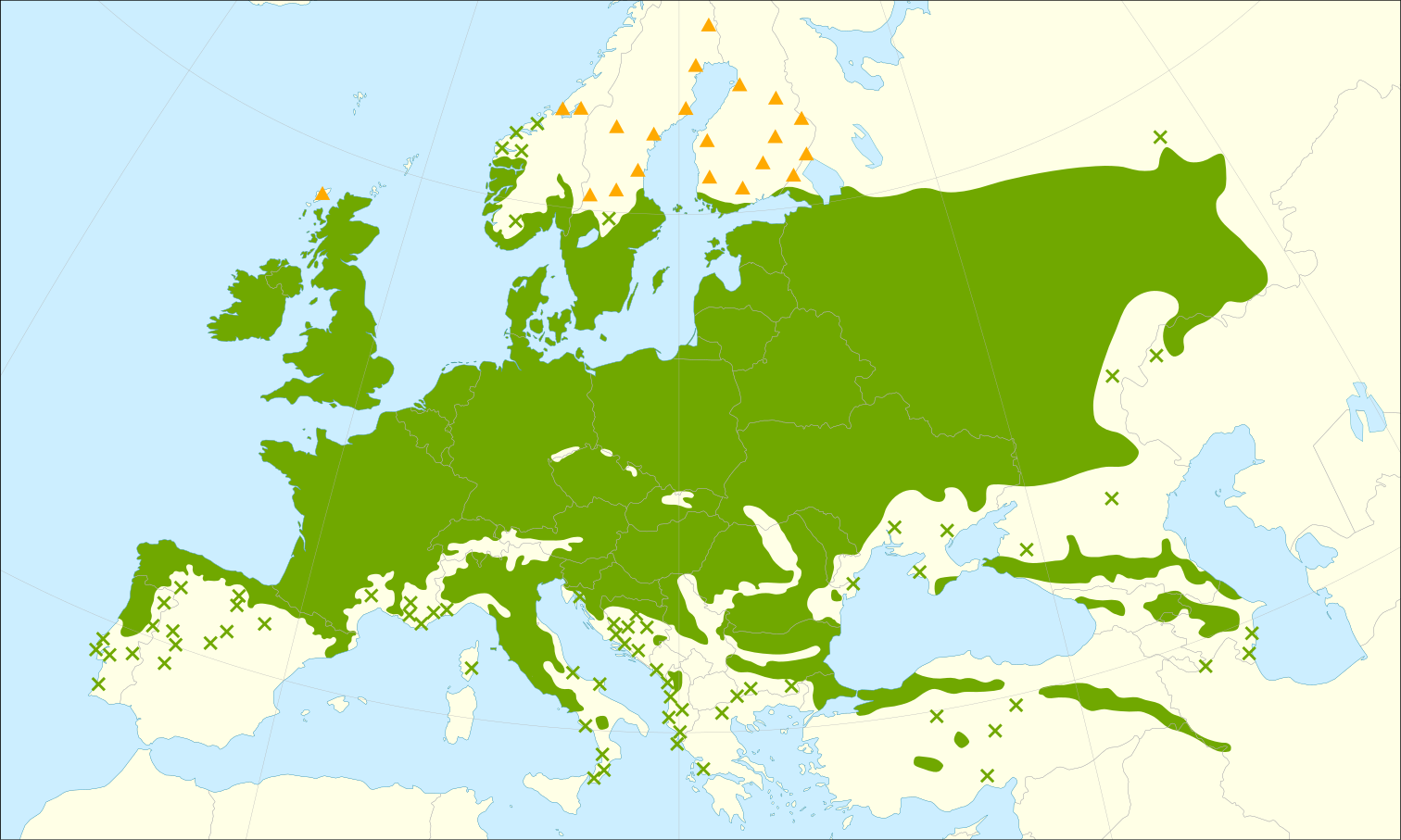
Q. robur is distributed across virtually all of Poland, reaching highest abundance in the central lowlands and in the large forest complexes of Mazovia, Greater Poland, and the Lublin region. It is the dominant oak in the floodplain forests (łęgi) along the Vistula, Warta, and Odra river systems. In Białowieża, Q. robur is a principal component of the lime-hornbeam forest type (Tilio-Carpinetum).
Ecological Requirements
Q. robur tolerates periodic flooding and waterlogging better than Q. petraea. It is associated with eutrophic soils rich in calcium and nitrogen. The species prefers a relatively high water table, which is reflected in its concentration in lowland and valley positions rather than upland or ridgeline sites.
Quercus petraea — Sessile Oak
Quercus petraea, the sessile or durmast oak, occupies drier, more acidic, and often hillier terrain than Q. robur. In Poland, it is more prevalent in the south and west of the country, particularly in the foothills of the Sudeten and Carpathian ranges, and in the sandy upland forests of the Kielce-Sandomierz Upland.
Morphological Identification
The name "sessile" refers to the acorns, which sit directly on the twig without a peduncle (or with a very short one of 5–10 mm). Leaves, by contrast, have distinctly longer petioles — typically 10–25 mm — and lack the basal auricles present in Q. robur. The lobes of Q. petraea leaves are generally shallower and more regular than those of Q. robur. The crown tends to be straighter and more upright.
Distribution in Poland
Q. petraea is less evenly distributed than Q. robur. It reaches higher concentrations in the submontane zones of southern Poland — Silesia, the Kielce area, and parts of Lesser Poland — and in the western regions, where it overlaps with the Atlantic-influenced distribution of the species. In northeastern Poland and the Masovian lowlands, it is much less common.
Ecological Requirements
Q. petraea tolerates more acidic and nutrient-poor soils than Q. robur. It is associated with well-drained sandy or stony soils, ridge and slope positions, and oak-dominated forest types such as the acidophilous oak forest (Luzulo pilosae-Quercetum). It is more drought-tolerant, which may give it a competitive advantage on the driest upland sites.
| Feature | Q. robur | Q. petraea |
|---|---|---|
| Acorn stalk | Long (3–8 cm) | None or very short |
| Leaf stalk | Very short (2–5 mm) | Longer (10–25 mm) |
| Leaf auricles | Present at leaf base | Absent or reduced |
| Preferred soil | Moist, eutrophic | Dry, acidic, well-drained |
| Topographic position | Valleys, lowlands | Ridges, slopes, uplands |
| Flood tolerance | Moderate | Low |
Hybridisation
Q. robur and Q. petraea hybridise where their ranges overlap, producing intermediate forms collectively referred to as Quercus ×rosacea. These hybrids are common in zones where both species coexist — for example, in the foothills of the Sudeten or on valley slopes in Greater Poland — and can make field identification difficult. Intermediate leaf morphology, mixed acorn attachment, and variable petiole length are typical indicators of hybrid origin. Polish botanical surveys document hybrid populations in numerous forest districts where both parent species are present.
Conservation Status in Poland
Neither Q. robur nor Q. petraea is considered threatened in Poland. Both are common components of managed and protected forests. However, the proportion of old-growth oak — veteran trees over 200 years old — has declined substantially over the past two centuries due to felling for timber. The protection of veteran specimens is addressed through the natural monument (pomnik przyrody) designation system administered under Polish nature protection law.
References
- Zając, A. & Zając, M. (eds.) (2001). Atlas rozmieszczenia roślin naczyniowych w Polsce. Laboratory of Computer Chorology, Kraków.
- Browicz, K. & Zieliński, J. (1982). Chorology of trees and shrubs in south-west Asia and adjacent regions. Arboretum Kórnickie.
- Denk, T. et al. (2017). The systematics and evolution of the genus Quercus. Plant Systematics and Evolution, 303: 1–54.
- General Directorate of State Forests, Poland. lasy.gov.pl
- Euro+Med Plantbase Project. emplantbase.org